Alternative Homes for First Home Buyers
For first home buyers navigating Queensland and Northern New South Wales property markets, the path to homeownership extends far beyond traditional site-built construction. While conventional stick-built homes remain popular, savvy buyers are exploring alternative construction methodologies that deliver superior outcomes in quality assurance, construction velocity, and long-term value retention.
The contemporary building landscape presents multiple pathways: traditional site construction, owner-builder projects, volume builder packages, and increasingly, prefabricated modular homes.
Each methodology carries distinct advantages and considerations, particularly regarding structural integrity, construction timelines, and builder reliability - factors that significantly impact first home buyers' investment security.
The Evolution of Prefabricated Construction Technology
Modern modular construction greatly differs from old prefabrication methods. Today's factory-built homes use advanced manufacturing processes, incorporating steel framing systems, engineered structural components, and precision assembly techniques that exceed traditional construction standards. This evolution has positioned modular homes as premium building solutions rather than budget alternatives.
The manufacturing environment of prefab homes enables consistent quality control protocols that cannot be replicated on traditional building sites. Climate-controlled factory conditions eliminate weather-related material degradation, moisture infiltration during construction, and the variability inherent in outdoor building environments.
These controlled conditions result in superior structural integrity and material longevity, which should be key considerations for first home buyers making their largest financial investment.
Financial Security Through Builder Stability
The Hidden Risks of Budget Builders
First home buyers often gravitate toward the lowest-price tenders, inadvertently exposing themselves to builder insolvency risks. The construction industry's volatile nature means smaller operators frequently lack the financial reserves to weather economic fluctuations, supply chain disruptions, or project complications. When builders collapse mid-construction, buyers face devastating consequences: incomplete homes, lost deposits, and lengthy legal proceedings.
Established Manufacturers are Your Investment Protection
Selecting an established home builder with documented financial stability provides crucial peace of mind. Companies with decades-long operational histories, substantial manufacturing facilities, and integrated supply chains demonstrate the resilience necessary to complete projects regardless of market conditions. This stability becomes particularly valuable when considering:
|
Risk Factor |
Small/New Builders |
Established Modular Manufacturers |
|
Supply chain disruptions |
High vulnerability, limited buying power |
Bulk purchasing agreements, inventory reserves |
|
Economic downturns |
Minimal cash reserves |
Diversified project portfolio, stable revenue |
|
Warranty claims |
Limited capacity to honour |
Structured warranty programs, dedicated support |
|
Project delays |
Cascading impacts across projects |
Parallel manufacturing capability |
|
Quality control |
Variable, site-dependent |
ISO-certified processes, systematic inspection |
Precision Through Controlled Environments
Factory-based construction fundamentally transforms quality assurance capabilities. Unlike site construction, where inspection occurs periodically, modular manufacturing allows for continuous quality checks at every assembly stage. Specialised jigs ensure precise alignment, automated cutting systems deliver consistent dimensions, and systematic inspection protocols identify defects before assembly progression.
Material Integrity Preservation
Construction materials begin degrading immediately upon exposure to environmental conditions. Site-stored timber absorbs moisture, steel components oxidise, and adhesives deteriorate under UV exposure. Modular manufacturing eliminates these vulnerabilities through climate-controlled storage and just-in-time material deployment. First home buyers benefit through reduced maintenance requirements, extended component lifespans, and minimised warranty claims.
Accelerated Construction Timelines
Traditional construction follows sequential progression: site preparation, foundation construction, framing, and systematic completion. Each phase depends on the previous stage's completion, creating cumulative delays when complications arise. Modular construction revolutionises this timeline through parallel processing, manufacturing proceeds simultaneously with site preparation, at times halving total construction length compared to traditional builders.
Consider typical timeline comparisons:
-
Traditional Construction: 8-12 months from slab to completion
-
Modular Construction: 12-16 weeks total, with only 4-6 weeks on-site assembly
Conquering Challenging Sites
Sloped and Difficult Terrain Solutions
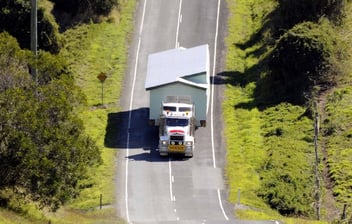
First home buyers often find affordable land on challenging sites - steep slopes, narrow access, or remote locations that traditional builders avoid or price prohibitively. Modular construction excels in these conditions through:
-
Minimised Site Impact: Reduced on-site construction duration means less erosion risk, vegetation disturbance, and neighbourhood disruption. Critical for environmentally sensitive areas or established neighbourhoods.
-
Access Flexibility: Modular components are crane-positioned, eliminating the need for extensive construction vehicle access. Sites with narrow driveways or limited street frontage become viable.
-
Reduced Labour Requirements: On-site assembly requires smaller crews for shorter periods, addressing trade availability challenges in regional areas.
Remote and Regional Construction Advantages
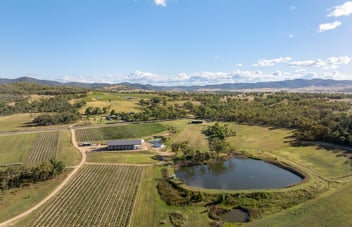
Queensland and Northern New South Wales include vast regional areas where traditional construction faces significant obstacles: trade shortages, material transportation costs, and accommodation expenses for workers. Modular construction addresses these challenges through centralised manufacturing and rapid deployment teams, making regional building projects economically viable.
Making Your Informed Decision
First home buyers evaluating modular construction should prioritise:
-
Manufacturer Credibility: Verify operational history, financial stability, completed project portfolios, and warranty provisions. Request evidence of insurance coverage, industry certifications, and regulatory compliance.
-
Quality Systems: Confirm ISO certification, third-party inspection protocols, and material traceability systems. Quality manufacturing transcends price considerations, it determines your home's 50-year performance.
-
Project Management Capability: Assess communication systems, progress reporting mechanisms, and issue resolution processes. Professional project management prevents misunderstandings and ensures timeline adherence.
-
Long-term Value: Consider total ownership costs, including maintenance requirements, energy efficiency ratings, and resale potential. Premium modular homes appreciate comparably to traditional construction while requiring less maintenance.
Wrapping up
Alternative construction methods offer first-home buyers pathways to homeownership that traditional building cannot match. Modular construction's combination of manufacturing precision, timeline compression, and site adaptability creates opportunities previously unavailable.
By selecting established manufacturers with proven quality systems and financial stability, buyers secure not just homes but long-term investment value.
The decision transcends simple price comparison, it encompasses risk mitigation, quality assurance, and lifestyle timing. For Queensland and Northern New South Wales first home buyers ready to explore beyond conventional construction, modular homes represent sophisticated building solutions that deliver certainty in an uncertain market.
Begin your journey by requesting detailed documentation of manufacturing processes, warranty provisions, and completed projects. Visit display homes and manufacturing facilities to witness quality firsthand. Most importantly, select partners whose operational stability and quality commitment align with your homeownership aspirations. Your first home deserves the precision, efficiency, and excellence that modern modular construction delivers.